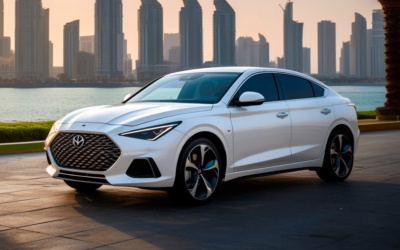
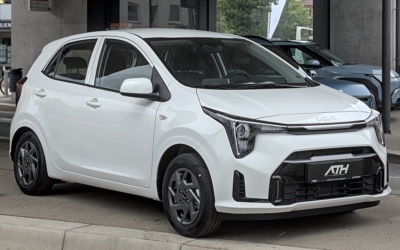
Abu Dhabi, the capital of the UAE, is about 130 kilometres from Dubai, an hour and a half along a straight highway. We covered the Dubai, Abu Dhabi and back route in a separate article. This one is about something else: where it is better to pick up a car if you are going to the capital, what you must check in the contract, and which rules on the capital's roads differ from Dubai's.
Three ways to get the car
| Option | Suits you if | What to watch |
|---|---|---|
| Pick up in Dubai, drive to Abu Dhabi and return in Dubai | You fly into Dubai and the capital is one of several trips | The loop is 260 to 300 km with driving around the city, a little over the 250 km daily allowance |
| Pick up in Abu Dhabi, at Zayed International airport (AUH) or in the city | You fly into the capital and stay there | The choice among companies is narrower; deposit, age and mileage terms differ by company |
| Pick up in Dubai, return in Abu Dhabi (one way) | You fly on from Abu Dhabi | Returning in another city is only possible by prior agreement, and may carry a separate fee |
For most tourists the first option is the most sensible: Dubai is the main rental market in the UAE, with a wider choice of cars and terms, and the trip to the capital takes one day. Settle the terms in advance: if you need delivery or return outside Dubai, ask when you book and get it confirmed in writing.
What to check in the contract before driving to the capital
- Territory. The rental and the insurance must be valid across all the emirates, not only in Dubai. This is usually the case, but check the line in the contract.
- Daily mileage. We include 250 km a day. Dubai, Abu Dhabi and back with driving around the city adds up to 280 to 300 km, so for this trip it makes sense to book two days at once or agree unlimited mileage.
- Toll roads. Salik gates in Dubai and Darb gates in Abu Dhabi are two different systems. Ask your manager how the charges are collected and added to the rental bill.
- Return. If you leave the car somewhere other than where you picked it up, agree the return point and the fee for it in advance.
- Fines. Fines arrive by the plate number and the company passes them to the renter. How this works is described in the articles on fines and on checking them.
How driving in Abu Dhabi differs from Dubai
- Speed tolerance. In Dubai a camera triggers with a 20 km/h margin over the limit; in Abu Dhabi there is almost no margin. Before you enter the emirate, about 60 kilometres from Dubai, slow down to the signed limit in good time.
- Darb toll gates. The capital uses its own system instead of Salik, with gates at the entry to the emirate near Ghantoot and on the bridges across the bay at peak hours. More in the article on Abu Dhabi toll roads.
- Mawaqif parking. In the centre parking is paid, by SMS or app. Hours, zones and free days are written on the sign, so read it before you leave the car. The main sights, including the Grand Mosque, Qasr Al Watan and the Louvre, have free car parks.
- Islands and bridges. The city stands on an island, and Yas, Saadiyat and Al Reem are islands too, joined by bridges. A navigator is more useful than usual, because slip roads on the bridges are close together and a lane mistake is harder to fix.
- The left lane. On highways the left lane is for overtaking only. If you are slower than the traffic, keep right.
Areas and routes by car
- The centre and the Corniche: walks, restaurants, paid parking.
- Saadiyat Island: the Louvre Abu Dhabi, beaches and museums, free parking at the museum.
- Yas Island: Ferrari World, Warner Bros World, a water park, the racetrack and a mall.
- Sheikh Zayed Grand Mosque: free entry, a large free car park, but a strict dress code. Details and a day plan are in the article on driving from Dubai to Abu Dhabi.
- Masdar City: an eco-city on the approach from the airport side, with interesting architecture.
What the trip costs on top of the rental
In an economy sedan, on top of the rental you pay for fuel, Salik and Darb gates and parking at a restaurant. In the article on driving from Dubai to Abu Dhabi we worked it out: it is less than 90 AED for any number of passengers, while a taxi both ways would cost several hundred dirhams. For two or more people the car pays for itself on a single trip.
When to go and when not to
From November to March the capital is ideal for long walks. In summer the midday heat is harsh, so see the city in the morning and after sunset. To avoid traffic, do not drive towards Abu Dhabi on Monday morning, when shift workers travel, and do not drive back on Thursday evening. It is better to leave early in the morning and return before 17:00 or after 20:00.
If you need the car for several weeks
If you came to Abu Dhabi for a longer stay, it is wiser to take the car for a month: the daily rate is lower than for a few days. We covered the terms of monthly rental and its pitfalls in a separate article.