The price of a rental car in Dubai depends on four things: the class of the car, the length of the rental, the season and what exactly the company builds into its rate. Two companies can show the same AED 90 a day, yet one will charge you 630 for the week while the other ends up at 1,100 once the deposit, mileage and delivery fees are added. Below are the benchmarks for September 2026 from our own fleet and the market as a whole, with an explanation of what sits behind the numbers. All prices are in UAE dirhams, which are pegged to the US dollar at 3.67.
Daily, weekly and monthly rates by class
| Class | Examples | Per day, AED | Per week, AED | Per month, AED |
|---|---|---|---|---|
| Economy | Kia Pegas, Mitsubishi Attrage, Nissan Sunny, Toyota Yaris | 109–140 | 710–910 | 2,090–3,100 |
| Mid-size sedan | Toyota Corolla, Honda Civic, Kia K5, Hyundai Sonata | 130–170 | 840–1,100 | 2,850–3,750 |
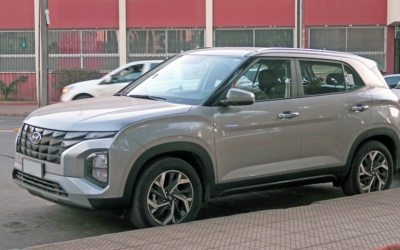
| Compact crossover | Toyota Raize, MG ZS, Hyundai Creta, Kia Seltos | 109–150 | 700–980 | 2,200–3,300 |
| Mid-size crossover | Kia Sportage, Mazda CX-5, Toyota RAV4 | 170–220 | 1,100–1,320 | 3,750–4,400 |
| Seven-seaters | Chery Tiggo 8 Pro, Kia Sorento, Hyundai Santa Fe | 190–230 | 1,240–1,380 | 4,200–4,600 |
| Full-size SUV | Chevrolet Tahoe, Toyota Land Cruiser, Nissan Patrol | 350–600 | 2,100–3,600 | 7,000–12,000 |
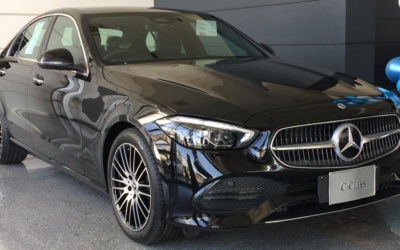
| Premium | Mercedes C200, BMW X5, Range Rover Sport | 350–900 | 2,400–5,200 | 7,000–17,100 |
| Luxury | Mercedes G63, Range Rover Vogue, Bentley, Rolls-Royce | 1,300–4,500 | 7,500–24,750 | 24,700–76,500 |
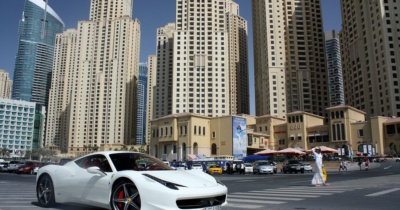
| Supercars | Lamborghini, Ferrari, McLaren, Porsche 911 GT3 | 1,800–6,000 | 9,900–34,300 | from 30,600 |
The most common mistake visitors make is comparing daily rates only. Our weekly rate equals roughly six days, and the monthly rate equals 17 to 22 days depending on the class. Those multipliers vary a lot between companies, and that is where half of the savings hide.
What our rate includes
Basic insurance with an excess, registration in the Salik toll system, 250 km of mileage per day, servicing, a replacement car in case of breakdown and delivery anywhere in Dubai, hotel, airport or office, free on rentals from 7 days. We do not take a deposit on any car, supercars included. The 5 percent VAT is already inside the prices on the site.
That is not the market standard. International chains at the airport include less but offer a counter and a queue. Small operators in Deira quote 10 to 15 dirhams a day less than we do, but charge for delivery, count kilometres strictly and block a deposit on your card for a month. Whichever company you choose, read the section of the contract about extra charges before paying. It is usually on page two in small print.
What is never included anywhere
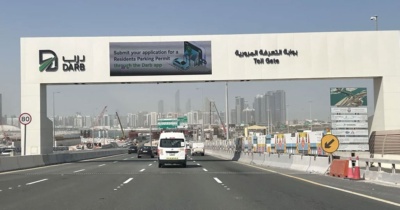
Fuel: the car is handed over with a certain level and must come back with the same, otherwise you pay the difference plus a service fee. With us the car comes with a full tank, and on rentals over five days the first tank is free. Salik toll crossings at AED 4.20 to 6.30 each, charged automatically and passed on as incurred. Traffic fines, which reach the car within 1 to 14 days. Parking, which is paid almost everywhere in Dubai from 8 am to 10 pm. This is how every rental in the UAE works, and a sensible budget adds AED 20 to 40 a day for these items on an economy car.
Typical extra charges at other companies
- Deposit of AED 1,000 to 5,000, and 10,000 to 20,000 on supercars. Blocked on a credit card and released 14 to 30 days after return if there are no fines. For many visitors without a foreign credit card this is a deal-breaker.
- Mileage cap of 150 to 250 km a day, with AED 1 to 10 per extra kilometre depending on the class. A return trip to Abu Dhabi is 260 km.
- Delivery and collection at the airport or hotel, AED 50 to 150 each way.
- Additional driver, AED 20 to 50 a day; some companies add a spouse free of charge.
- Child seat, AED 20 to 35 a day.
- Zero-excess insurance, AED 30 to 100 a day on regular cars and 200 to 500 on supercars.
- Young driver under 25: a surcharge of AED 50 to 100 a day or a refusal on premium cars.
- Fine handling fee of AED 50 to 100 per fine on top of the fine itself. We do not charge one.
- Cleaning fee of AED 50 to 100 if the car comes back dirty.
How prices move with the season
High season runs from November to March: the weather is at its best, tourist numbers peak and there are not enough cars to go round. Supercars for New Year and February are booked a month ahead, economy cars go up 20 to 40 percent, and seven-seaters disappear first during school holidays. From June to September prices are at their lowest, availability is wide and monthly rentals are especially good value. April, May and October sit in between with average rates and steady demand.
Ramadan is a case of its own: demand and prices drop, but the city's rhythm shifts to the evening. Large exhibitions such as GITEX in October also empty the premium sedan segment as corporate clients book them out.
Where a company's price comes from
Understanding this helps you tell a genuinely low price from bait. An economy car costs a rental company about AED 3,000 a month in depreciation, insurance, registration, servicing and idle days. So it cannot work below AED 90 to 100 a day on a one-day rental, and if somebody quotes 60, the money will be collected elsewhere. Long rentals have different economics: the car never sits idle and there is one delivery, so a month at around AED 2,100 is realistic.
How to pay less
- Take the car for a full week if you drive every day: the weekly rate equals six days, the seventh is free.
- For three weeks or more, look at the monthly rate, it is often cheaper than three weeks at the weekly rate.
- If you only need two or three trips, rent for specific days rather than the whole holiday. On rentals from a week delivery and collection are free, and even with a delivery charge on a short rental a car idling at the hotel costs more.
- An economy car is enough for a day trip to Abu Dhabi: the road is flat, speed is limited, the comfort gap to an SUV is small.
- Estimate your mileage in advance. If you plan to cover all seven emirates in three days, agree unlimited mileage beforehand; it is cheaper than paying for 300 extra kilometres.
- Book winter dates in summer: with a prepayment we lock the summer price for winter.
- Skip zero-excess cover on an economy car for one day, but take it for a week: AED 30 a day over seven days is less than the AED 1,500 excess.
Worked example: a week for two
Kia Pegas for 7 days: AED 710. Fuel at 100 km a day: the first tank is free on rentals over five days, so only about AED 50 more. Salik with two gates a day: AED 60. Parking: AED 100. Total around AED 920 for the week, or about 130 a day. Taxis on the same schedule would cost AED 1,500 to 2,000. A Kia Sportage for a family over the same week: AED 1,240 plus the same running costs, about AED 1,450.
Common questions about price
Can you negotiate? On long rentals and out of season, yes; for a week in February, no. Does the price change after booking? Not with us: you pay what you saw at confirmation. What if I return the car early? We recalculate at the applicable rate for the days used and refund the balance. Are there hidden fees? No. Every possible charge is listed in the contract, and all of them are pay-as-you-go: fuel, Salik, fines.
How different types of company build their prices
Three kinds of operator work in the Dubai market, and knowing the difference saves both money and stress.
International chains: Hertz, Avis, Budget, Europcar, Sixt. Desks at the airport and in malls, consistent standards, English-speaking support and loyalty programmes. Prices run 20 to 40 percent above the market, a deposit is mandatory and credit-card only, and the cars are new but in base trim. They suit corporate clients paying on invoice and anyone who needs a recognisable brand for expense reporting.
Large local companies: typically 100 to 500 cars, a city office, delivery and a website with online booking. Prices sit at the market average, most take a deposit but a smaller one. This is the main segment and where we operate.
Small operators: 10 to 50 cars, often with no office, working through WhatsApp and classified ads. Prices run 15 to 25 percent below market, but the risks are higher: the car may be older than advertised, the insurance minimal, and after an accident the company starts looking for ways to shift costs onto you. Check reviews and RTA licensing before booking.
How to read the contract before signing
A UAE rental contract runs two or three pages, and none of the important parts are on the first. What to look at:
- The mileage clause. How many kilometres are included per day and what each extra one costs. AED 1 and AED 10 differ tenfold, and over a week that can mean AED 500.
- The fuel clause. Full-to-full means returning the car at the same level. Full-to-empty appears less often and is almost always worse for the customer.
- The excess clause. The amount you pay after an accident. Check it matches what you were told verbally.
- The fines clause. Whether there is a handling fee for passing fines on, and how much.
- The return clause. How much grace time you get beyond the agreed hour, usually one to two hours, and how lateness is charged: hourly or as a full extra day.
- The damage list. Every existing scratch must be marked on the vehicle diagram. If the diagram is blank but the scratches are not, insist they are recorded.
Class and price: where the savings actually are
The gap between an economy sedan at AED 109 and a compact crossover such as the Kia Seltos at AED 150 is about AED 290 over a week. For that you get higher seating, a bigger boot and better visibility in dense traffic. For a family with children that is money well spent; for a couple on a three-day trip usually not.
The gap between a AED 190 crossover and a AED 450 premium model is AED 1,800 over a week. Here you are paying for the badge, the interior finish and the power, not for extra usefulness: on Dubai roads limited to 100 to 120 km/h the performance difference never gets used.
The most common mistake is taking a large SUV "just in case" for trips that never happen. A Nissan Patrol costs about AED 1,700 more than a Kia Seltos over a week and burns AED 400 more fuel, while 90 percent of a visitor's driving happens on city tarmac.