The difference shows up, just not always where you expect
In Dubai both a sedan and an SUV handle the city and the highway equally well: roads are smooth, signage is clear, navigation works without surprises. The real difference is not about tarmac performance, it is about three things a first-time visitor does not always think about ahead of time: how fast the cabin cools down after sitting in the sun, how easy the car is to park at hotels and malls, and how comfortable it is for four people with luggage for the whole trip.
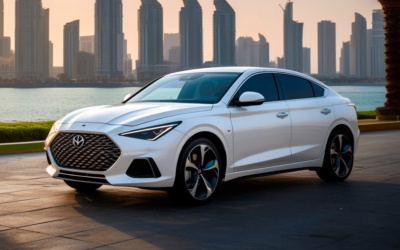
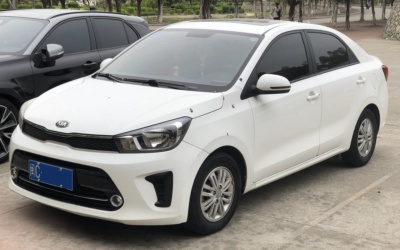
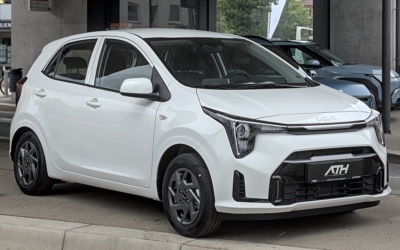
A sedan is usually lower, lighter and more compact, with less glass area, so the cabin reaches a comfortable temperature faster after standing in the sun. A crossover or SUV sits higher, with more ground clearance and cabin volume, so the air conditioning needs more time and power to cool the space, but in exchange you get a higher seating position, better visibility in traffic and more room for bags and child seats.
Heat and air conditioning
From May to September, asphalt temperature in Dubai easily passes 55–60°C, and a car that has spent an hour in an open parking lot near the beach or a mall heats up completely, including the wheel and the dashboard plastic. A sedan has a smaller cabin volume, so the air conditioning cools it down noticeably faster, usually three to four minutes on the highway with the fan on full. An SUV or crossover, with its higher seating and larger volume, takes longer to cool, especially with a third row fitted.
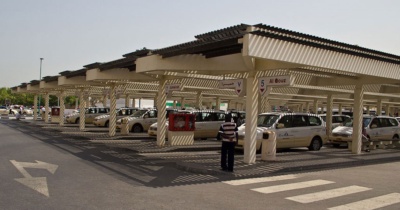
In practice this rarely matters: most parking in Dubai is either covered (malls, hotels, underground parking at residential buildings) or shaded. But if your day involves many short stops in direct sun, a sedan wins on comfort in the first few minutes after getting in.
Parking in the city
In Dubai Marina, Downtown and along Sheikh Zayed Road, parking spots at business towers and underground parking at residential buildings are often narrow, with steep ramps at the entrance. A sedan is shorter and lower, so it fits a standard bay and low parking structures in older buildings more easily, some of which carry a height limit around 1.9–2.0 metres that can matter for larger SUVs. Crossovers and SUVs take up more space and need more care reversing into a bay, but newer malls and residential towers are already built with larger cars in mind, so in practice the difference is mostly felt in older neighbourhoods and hotels with tight underground parking.
Desert and Hatta
Here the difference is fundamental. A sedan is built for asphalt: low ground clearance, a front bumper overhang and suspension tuned for smooth roads do not suit gravel or sand tracks. A sedan can comfortably reach Hatta or the edge of the desert on paved roads, but leaving the asphalt for a graded track, let alone a dune, is not a good idea: getting stuck is easy, and insurance does not cover off-road damage on a car that was never meant for it.
A crossover with decent ground clearance copes better with gravel sections and Hatta's mountain road, but real dunes at Al Qudra or Al Lahbab need a proper four wheel drive SUV with a low range gearbox, for example a Nissan Patrol or Toyota Land Cruiser. We cover which car actually suits dune driving in a separate desert driving guide.
Family, business trip or a trip for two
For one or two people travelling with carry-on luggage and for business trips around the city, a sedan is almost always the more sensible choice: it costs less to rent, uses less fuel, and it is easier to park near offices and downtown. For a family with children and a week's worth of luggage, an SUV is more practical: the higher seating makes fitting a child seat easier, the boot takes several suitcases and a stroller, and some models with a third row let you bring two more passengers along.
| Trip type | What suits it |
|---|---|
| Solo or business trip around the city | Sedan: more compact, cheaper, easier to park |
| Family with children and luggage | Crossover or SUV: higher seating, bigger boot |
| Highway to Abu Dhabi, Al Ain, the coast | Sedan or crossover, the difference is not significant |
| Hatta by paved road and the mountain route | Crossover is more comfortable, but both will get there |
| Real dunes | Only a four wheel drive SUV with a low range gearbox |
Price and running costs
In our fleet, sedans start at AED 119 a day for a Toyota Yaris and AED 130 for a Corolla, while crossovers and SUVs cost noticeably more: a Toyota Land Cruiser Prado from AED 400, a Nissan Patrol from AED 450, a BMW X5 from AED 650. A sedan is almost always cheaper to rent and more fuel efficient on the highway, but the price gap also reflects a gap in capability: if the trip stays within the city and the highway, paying extra for an SUV is not always worth it. If Hatta, a beach with a gravel access road, or simply a higher seating position and extra space are on the agenda, the crossover earns its price.
Visibility and confidence in traffic
On Sheikh Zayed Road and at the big interchanges, traffic is dense and lanes change quickly, often several at once. The higher seating position of a crossover or SUV gives a better view ahead over neighbouring cars, which makes lane changes easier and is especially noticeable for anyone still getting used to the local driving style. A sedan sits lower with a more modest view, but the car itself is more compact, easier to thread through lanes and easier to pull into a tight petrol station forecourt.
Fuel use and the included mileage
Both categories include 250 km of mileage a day, and any excess is charged at a fixed rate that depends on the specific car. On fuel economy a sedan is almost always cheaper to run: it shows clearly on the highway with a Toyota Yaris or Corolla. A crossover and especially a full-size SUV burns more fuel because of its weight and larger engine, and on a long trip, say to Abu Dhabi and back, the difference in fuel per tank adds up. On rentals of 5 days or more the first tank of fuel is included regardless of the car's class.
Which model to pick within each category
Within sedans, the difference between the Yaris and the Corolla mostly comes down to cabin and boot size: the Corolla is roomier and more settled on the highway, the Yaris is smaller and easier to manoeuvre in the city, and we cover this comparison in more detail separately. Among crossovers and SUVs the range is wide, from a compact Range Rover Evoque for city use to full-size Nissan Patrol and Land Cruiser models for a family or off-road trips, with the BMW X5 and Audi Q7 sitting in between, offering city comfort with room for a long drive. The Q7 also has a third row, which is a plus for a family of five or more.
What to book
If you are travelling alone or as a couple with no serious off-road plans, book a sedan: it is cheaper, more fuel efficient and easier to park in the centre. If you are travelling as a family, with children or a lot of luggage, or planning a drive to Hatta on the mountain road, a crossover makes more sense. For real desert and dune driving you need a proper four wheel drive SUV, not a crossover with a road-biased drivetrain. Minimum rental is 1 day, the age requirement of 21 with at least 1 year of driving experience applies equally across every class, and there is no deposit on any car.