The UAE is home to one of the largest Pakistani communities in the world, and a good part of it keeps a car on rent for months at a time rather than taking a taxi for every trip. Here is what a Pakistani citizen needs to rent a car in Dubai: which licence is accepted, how to pay, and where people usually drive.
Licence and International Driving Permit
A Pakistani national driving licence on its own is not on the list of roughly forty countries whose licences are accepted directly by the UAE for tourists (the full list is in our separate guide to driving licence requirements). In practice this means you will most likely need an International Driving Permit (IDP), issued in Pakistan before you fly, carried together with your Pakistani licence.
If you are moving to the UAE on a residence visa and plan to stay long term, the next step is usually exchanging or applying for a local licence through the RTA, but that is a separate process unrelated to car rental and not something we handle. Before travelling, check the current country list and requirements in our dedicated guide to UAE driving licence rules: the list is updated from time to time, and it is worth confirming it before departure rather than relying on memory.
Payment
We accept cash, card and bank transfer, full prepayment with no deposit on any car. If your card is issued by a Pakistani bank, check with your bank before travelling whether international transactions are enabled and whether an overseas spending limit needs to be lifted; on some cards this is a separate setting in the banking app. It is sensible to also carry some cash dirhams as a backup, especially in the first days of the trip before you have confirmed the card works locally.
Popular routes
A large Pakistani community lives not only in Dubai but also in Sharjah, Ajman and other emirates, and visiting family and friends across the emirates is one of the common reasons to rent a car rather than rely on taxis for every trip. Free movement between emirates with 250 km of included mileage a day suits exactly this kind of regular visiting.
| Route | Approximate distance | Drive time |
|---|---|---|
| Dubai to Sharjah | about 30 km | 30 to 45 minutes depending on traffic |
| Dubai to Ajman | about 45 km | 40 to 60 minutes |
| Dubai to Abu Dhabi | about 140 km | 1.5 hours on the highway |
| Dubai to Al Ain | about 130 km | 1.5 hours on a straight highway |
| Dubai to Hatta | about 130 km | 1.5 hours |
Beyond family visits, popular day trips include Abu Dhabi with the Sheikh Zayed Mosque, Hatta with its mountains and lake, and Al Ain with its oasis and the Jebel Hafeet mountain road. All of these routes run on good paved highways, so a four-wheel-drive SUV is not required unless you plan to leave the highway for desert tracks separately.
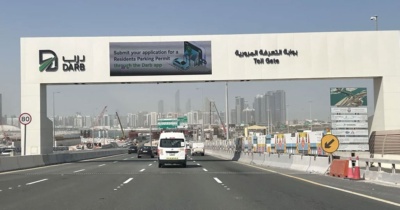
The toll tag for Dubai's Salik and Abu Dhabi's Darb is already fitted in the car, no extra setup is needed at booking, and charges are deducted automatically as you pass through the gates.
Monthly rental instead of frequent short trips
If you need a car on a regular basis rather than for a single visit, the monthly rate is almost always better value than several separate rentals: a month costs the equivalent of 17 to 22 days depending on the class, not thirty. On rentals of 7 days or more, delivery and collection anywhere in Dubai are free, including DXB and DWC airports.
What to bring
- Passport and a valid visa, or a UAE residence visa.
- Pakistani national driving licence.
- International Driving Permit (IDP), arranged in advance in Pakistan.
- A bank card with international transactions enabled, or cash dirhams.
Minimum age 21 and at least 1 year of driving experience apply to every car in our fleet, including supercars and the G-Class, with no extra requirement specifically for Pakistani citizens.
Driving on the right instead of the left
Pakistan drives on the left with the steering wheel on the right, while the UAE drives on the right with the wheel on the left. The difference is most noticeable on the first day at roundabouts, where UAE traffic already on the roundabout has priority and you enter from the right, and when your hand instinctively reaches for the wrong indicator stalk. A few practical tips: plan your first drives on familiar highways such as Sheikh Zayed Road rather than the narrow lanes of old Dubai, take roundabouts slowly, and pay attention to lane markings, which are usually clear and well lit even at night in Dubai.
Insurance and what is included
The rental price already includes insurance (third party plus partial own-damage cover), 250 km of mileage a day, a full tank at handover, and a free first tank on rentals of 5 days or more. Extended zero-excess cover is available as a paid add-on, ask for the current rate when booking. There is no deposit on any car, luxury models included, and our office is in Princess Tower, Dubai Marina.
Support and office
Support works in English and Russian, daily from 10:00 to 19:00, this is not a 24-hour service. Minimum rental is one day, you can pick the car up at the office or request free delivery anywhere in Dubai to a hotel, home or the DXB or DWC airport on rentals of 7 days or more. For shorter rentals, delivery and collection together cost AED 210 regardless of location in Dubai.
Which car to choose for a large family group
Visiting relatives in Pakistan often means travelling as a large group, and the fleet has options roomier than a standard sedan for exactly this. The Nissan Patrol Titanium 2025 (275 hp, 8 seats) from AED 450 a day and the Toyota Land Cruiser Prado 2024 (278 hp, 7 seats) from AED 400 a day fit the whole family with luggage and handle both the highway between emirates and the graded tracks near Hatta with equal confidence. If the group is even bigger, we run a separate line of minivans and minibuses, see our minivan and minibus rental guide for details. For everyday trips a simple sedan or crossover also works well, and the price gap between an economy car and a full-size SUV can be as much as three times.
In short: bring your Pakistani licence together with an IDP, confirm your card works internationally or carry cash, and pick the car size around how many people you are actually driving with. Everything else, insurance, tolls, delivery, works the same way it does for any other renter.