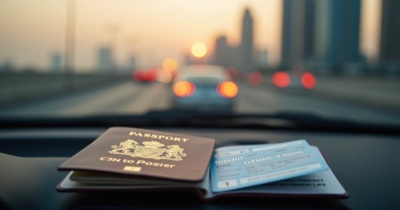
Most of the year Dubai is dry and clear, so many visitors have never driven here in the rain. That matters, because when it does rain the roads change quickly. The surface has been dry for a long time, drivers are out of practice on wet asphalt, and the expressways are busy. Below are simple rules that work for any renter.
Why rain in Dubai is more dangerous than it looks
The first minutes of rain are the trickiest. Dust and traces of oil build up on dry asphalt, and with the first water they form a thin slippery film. Grip drops more than you would expect in a country where rain is normal. On top of that, drainage in some places does not cope with a lot of water at once, so deep puddles appear on the road.
The basic rule is simple: when it starts to rain, slow down early, before the car begins to float. The speed limit signs are set for dry roads. In the rain you are not obliged to reach them.
How to drive on a wet road
- Leave more distance. Braking takes longer on wet asphalt. Keep at least twice the gap you would keep in dry weather.
- Smooth inputs. Avoid hard braking and sharp steering. Lift off and add throttle gently.
- Use dipped headlights. It helps other drivers see you. Main beam in rain or fog reflects back and dazzles you.
- Wipers and demisting. Check before you leave how the wipers and windscreen demister work. If the glass fogs up, switch on the air conditioning.
- Turn off cruise control. On a wet road it is better to control speed with the pedal.
- Keep your phone down. Distraction is much more dangerous in poor conditions.
If the rain becomes so heavy that you can barely see the road, do not keep going in the outer lane of an expressway. Find a safe place to stop: a petrol station, a mall car park, an underground car park. Stopping on the expressway itself is only a last resort.
Morning fog
In the cooler months, especially early in the day, thick fog can form along the coast and on roads heading toward the desert. Visibility can drop within minutes. What to do:
- slow down and use dipped headlights, plus fog lights if the car has them;
- follow the road marking on your right rather than the headlights of oncoming cars;
- do not overtake or change lanes unless you have to;
- do not stop on the carriageway: in fog this is the most dangerous thing you can do, because drivers behind may not see a stationary car;
- if you cannot continue, leave at the nearest exit or pull into a petrol station and wait for the fog to lift.
If you plan an early trip out of town, for example toward Hatta or Fujairah, check the forecast the evening before and allow extra time.
Standing water and flash floods
Dubai can get heavy downpours, after which water collects in low parts of roads and in underpasses. The rules here are strict:
- do not drive into deep water if you cannot see the bottom and do not know how deep it is;
- dry riverbeds (wadis) in the foothills can fill with fast water even when it is not raining where you are. Do not park or drive in a wadi during or after a storm;
- if you must pass through water, go slowly and steadily without stopping, then press the brakes lightly a few times to dry them;
- if the engine stalls in water, do not try to restart it: this can cause serious damage. Switch on the hazard lights and call us.
Hazard lights and stopping
Hazard lights are for when the car is stopped or is a danger to others. Using them during ordinary driving in rain is not a good idea, because they can confuse the drivers behind you. If you need to stop at the roadside, turn them on in advance, pull over smoothly and, if possible, get out on the side away from traffic.
The rental car: cover and damage
On most of our cars insurance is included in the rental price. But the exact cover, the renter's share of any damage and the cases where cover does not apply depend on the car and the contract. This is especially true for water damage and driving through flooded sections. So before you head out in bad weather, ask us what exactly is covered, and in any incident tell us at once and do not repair the car yourself. There are separate articles on the site about what to do after an accident.
If the forecast is poor and you do not have to drive, it is better to wait. Daily rental lets you move a trip, and our managers work every day from 10:00 to 19:00 and speak Russian.