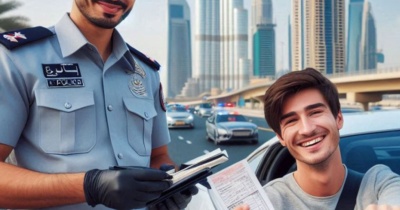
Roads in the UAE are safe and well engineered, but traffic density is high and local driving style is assertive, so minor collisions in car parks and heavy traffic happen regularly. The procedure has been refined by the state into something almost automatic, so there is no need to panic, but there are five things to do in the right order.
Step 1. Assess the situation and clear the road
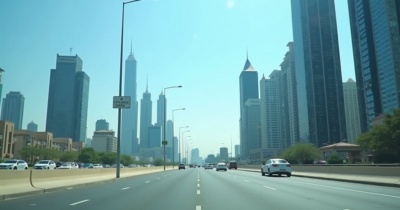
If nobody is hurt and the cars still drive, move onto the hard shoulder, a lay-by or the nearest car park. Staying in a live lane after a minor accident carries a AED 1,000 fine, because you create congestion and a secondary collision risk, which on Sheikh Zayed Road is a genuine danger. Switch on your hazard lights. If anyone is injured, if a car cannot be driven, or if a motorcycle or pedestrian is involved, stay where you are and call 999 immediately.
A warning triangle is mandatory in the UAE and lives in the boot; place it 50 metres behind you on a highway.
Step 2. Call the police or file through the app
999 operates around the clock in Arabic and English. Tell the operator where you are, whether anyone is injured and how many vehicles are involved. A patrol arrives in 15 to 30 minutes in the city and up to an hour on inter-emirate highways.
For minor accidents without injuries, Dubai has the Dubai Police app with a Minor Accident section. The process: photograph both cars and the damage from several angles, enter both plate numbers and driving licence details, and the system produces a report within minutes with no officer needed. The report arrives in the app and by email. Abu Dhabi has an equivalent called Saaed and Sharjah its own system. This is the fastest route when both parties agree on fault.
Step 3. Do not argue or settle on the spot
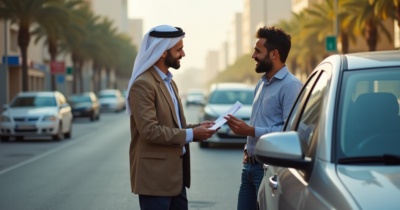
Settling with cash on the spot without police is pointless and risky: without a report the insurer will not pay and the rental car repair falls on you regardless of what the other driver handed over. Do not admit fault verbally and do not apologise: in Arab culture an apology can be read as an admission, and fault is determined by the officer from the scene and the damage. Do not move the vehicles before photographing them unless they block traffic.
Step 4. Get the report
The officer issues a report which in Dubai is colour-coded. Pink means you are at fault: the insurance excess is yours to pay. Green means the other party is at fault: you pay nothing and their insurer covers the repair. A white report is sometimes issued for shared or undetermined fault.
The report arrives electronically on your phone; a paper copy is not always handed over. The fine for the offence that caused the accident, usually AED 400 to 1,000, comes separately to the car.
Step 5. Call us
Immediately after filing, not in the evening. We decide whether the car can continue in service, bring a replacement of the same class if it cannot, and arrange recovery. We handle the repair through the insurer, so you do not visit workshops or assessors. All we need from you is the report number and the photographs.
If someone is injured
Call 999 at once; the ambulance comes through the same number. Do not leave the scene under any circumstances: leaving an injury accident is a criminal offence carrying imprisonment and deportation. Do not move an injured person unless there is a fire risk. Medical care is given regardless of insurance, and the bill is later settled by the at-fault driver's motor insurance or your own medical cover.
If someone hits you and drives off
Note and write down the plate, and photograph the car if you managed to. Call the police and report it. Cameras cover almost everywhere in Dubai, including mall car parks, and the vehicle is usually traced within days. Your report will be green and you pay nothing.
Typical situations
- A scratch in a mall car park with no other driver present. Call the police; they will request the car park camera footage. Without it the report is pink and the excess is yours.
- A stone chip in the windscreen on the highway. Not an accident, no report needed; with us the windscreen is covered with no excess. Just let us know.
- Hitting a kerb and damaging a wheel or tyre. Not an accident; charged per the repair price list, usually AED 300 to 800 for a wheel. With us tyres are covered by insurance.
- Rear-ending someone in traffic. Almost always a pink report: in the UAE the following driver is at fault except in rare cases.
- Someone rear-ends you. Green report, you pay nothing.
- A collision while changing lanes. The driver who changed lanes is at fault, established from the damage and cameras.
- Hitting a camel or goat on the highway. This happens on the roads to Hatta and Al Ain. Call the police, a report is essential, and the animal usually has an owner.
What to keep in the car
The vehicle registration card and rental contract in the glovebox, the warning triangle in the boot, a charged phone with the Dubai Police app installed, and our number on speed dial. A first aid kit is not legally required in the UAE but is useful. Pen and paper are unnecessary as everything is filed electronically.
Timings and consequences
Filing through the app takes 10 to 20 minutes; with a patrol attending, up to an hour. Repairs after a minor accident take a day or more, and after a serious one several weeks, but that is our concern rather than yours: a replacement car arrives the same day and is included in the rate. Fines and the excess are calculated once the report is issued, usually within a week.
The Dubai Police app: how to use it
Install it as soon as you collect the car, not at the moment of an accident. The app is free, works in English and Arabic and is available on the App Store and Google Play.
The Traffic Accident section splits into Minor Accident for collisions without injuries and Major Accident, which simply summons a patrol. The minor accident process runs like this: confirm nobody is injured, enable location, photograph both cars in full plus close-ups of the damage with at least four images, enter both plate numbers and both drivers' licence numbers, state who you believe is at fault, and the other driver confirms this in their own app or via a link they receive.
The system processes the submission in anything from a few minutes to half an hour and issues a numbered report, sent by email and stored in the app. That number is all the insurer and we need.
If the other driver refuses to take part or disputes fault, the app will not help; call a patrol on 999.
What to do before the police arrive: a checklist
- Check everyone is unhurt and call an ambulance on 999 if needed.
- Switch on hazards and place the warning triangle on a highway.
- Photograph the vehicle positions before moving anything, plus wide shots and damage.
- Photograph both plates and the other driver's licence.
- If the cars block traffic, move them to the shoulder.
- Note the other driver's name and phone number.
- Find witnesses if the situation is disputed and take their contacts.
- Do not discuss fault and do not sign anything the other driver offers.
- Call us and we will guide you through it.
Myths about accidents in the UAE
"If the damage is small you can settle in cash." You cannot: without a report you pay for the rental car's repair regardless of what you were handed, and the repair usually costs more than what is offered on the spot.
"Foreigners are always found at fault." Untrue. UAE police determine fault from the scene, the damage and camera footage, and nationality plays no part. Dubai has cameras at almost every junction.
"You can drive off if the damage is minor and nobody saw." Leaving the scene is an offence, and cameras capture almost everything. The car is traced by its plate within a day or two, and the consequences exceed the repair cost.
"Insurance covers everything if I am not at fault." Only with a police report confirming the other party's fault. Without a report fault is not established.