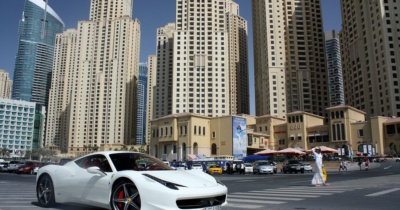
Cameras on Dubai roads, including fast sections like Sheikh Zayed Road, generally start recording a violation at around 21 km/h over the posted limit. Below that margin a camera typically does not trigger, but that does not mean speeding up to that point is free of consequence, the posted limit itself, 100 or 120 km/h depending on the stretch, is still the legal limit. From there, the fine, the points and any impound do not grow smoothly, they jump in steps depending on how far over the limit you were caught.
The fine, points and impound table
| Over the limit | Fine | Black points | Impound |
|---|---|---|---|
| up to 20 km/h | AED 300 | 0 | none |
| 21–30 km/h | AED 600 | 0 | none |
| 31–40 km/h | AED 700 | 0 | none |
| 41–50 km/h | AED 1,000 | 0 | none |
| 51–60 km/h | AED 1,500 | 6 | 15 days |
| 61–80 km/h | AED 2,000 | 12 | 30 days |
| over 80 km/h | AED 3,000 | 23 | 60 days |
Up to 50 km/h over the limit, it is purely a money matter, no points and no impound. The point where everything changes at once is 51 km/h over, the fine jumps to one and a half times the previous step, six black points land on the license and the car is impounded for two weeks. From there the numbers climb even faster, and going more than 80 km/h over gets you close to the maximum points and two months with the car off the road.
What black points actually mean
Black points are recorded against the driving license and accumulate over a period. Get enough of them and the RTA can suspend the license, the exact thresholds and rules are updated from time to time, so it is better to treat black points as something to avoid outright rather than a budget you can spend on one trip. It is harder for a tourist driving in Dubai for a week or two to rack up points than for a resident over a year, but a single serious speeding violation on a fast road can add six or twelve points in one go, which is already a meaningful share of a yearly allowance.
Who is responsible for the fine on a rental car
The fine and the points belong to whoever was actually driving at the moment of the violation. The rental agreement always names the renter as the driver, so the notice for a camera-recorded violation is issued against the car, and we, as the owner, pass it on to the renter. This is standard practice for any rental company in Dubai, not something specific to us. If more than one person drove under the same agreement, responsibility still follows whoever was behind the wheel at the moment of that particular violation, so it is worth agreeing on this in advance if several people will be driving the car.
If the car actually gets impounded
An impound of 15, 30 or 60 days means the car physically sits in the pound for that whole period, regardless of when it was due back under the rental agreement. It cannot be rented out to anyone else during that time, it simply sits idle. Under the standard rental terms, downtime caused by the renter, including days lost to impound after a speeding violation, is charged to the renter at the normal daily rate for those days, separately from the fine itself and separately from any points. In short, an accident caused by someone else or a mechanical breakdown is one thing, an impound caused by your own speeding is downtime that the person who caused it pays for.
How to stay out of this situation
- Keep a mental buffer under the limit: if the sign says 100, do not push past 110-115, cameras start recording as low as 21 km/h over.
- The limit on Sheikh Zayed Road changes by section, 100 or 120 km/h, watch the signs rather than what you remember from a previous trip.
- Abu Dhabi's radar tolerance is essentially zero, even a couple of km/h over can be recorded there, be extra careful heading out of Dubai toward the capital.
- Use the car's cruise control on highways, especially on long straight stretches where it is easy to drift over the limit without noticing.
- Check for fines online after your trip rather than waiting for several notices to pile up, the earlier you spot one, the easier it is to plan the rest of the rental around it.
This is not the same as Salik or a parking fine
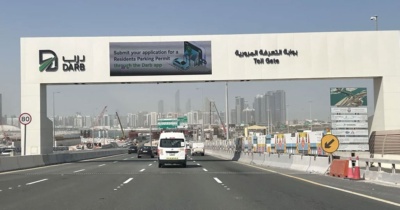
A speeding fine, the Salik road toll and a parking fine are three separate charges, and it is worth not mixing them up. Salik is deducted automatically when you pass a toll gate on the fast roads, a parking fine arrives if you did not pay for a bay through the app or a meter, and a speeding fine is recorded by a dedicated speed camera and comes with points under the table above. On a rental car, all three eventually land on the company as the vehicle owner and get passed on to the renter, but they are different amounts on different grounds, and they do not get mixed together on the statement.
How to check and pay a fine
You can check whether a car has any new fines through the official Dubai Police or RTA services by plate number, which is usually faster than waiting for a paper notice. We have a separate guide that walks through exactly how to check and pay a fine in Dubai step by step. If a fine has already reached us as the vehicle owner, we contact the renter directly, so you do not have to duplicate the check yourself, but doing it lets you find out about a violation sooner and adjust your driving for the rest of the trip.
If you disagree with a fine
Disputing a camera fine is in theory possible through official Dubai Police or RTA channels, but in practice, for a rental car, it is a fairly lengthy process, and the trip itself is usually over long before the dispute is. If you have a real reason to doubt the reading, an obviously faulty limit sign or a disputed stretch of road, keep a photo of the location and get in touch with us, we can point you to the current process. In most cases it is simpler and faster to just pay the fine and keep a bigger speed buffer on that stretch going forward.
Insurance will not help here
Every one of our rentals already includes insurance covering third-party liability and own damage to the car, and the paid full cover add-on removes the excess on damage as well. But a speeding fine, black points and days lost to impound are not damage to the vehicle, they are the driver's personal liability to the state, and no insurance, basic or extended, covers them. These are separate matters: an accident is covered by insurance, a fine for driving faster than the sign allows always stays with the driver.