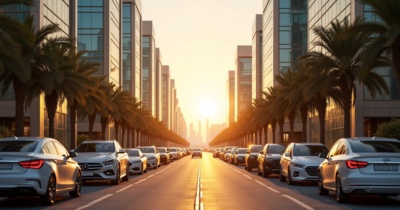
British travellers are one of the most common nationalities among our clients, and on paper this is one of the easier cases for documents and payment. The real adjustment is not paperwork, it is driving itself: the wheel is on the left instead of the right, and traffic keeps to the right side of the road instead of the left.
Licence and International Driving Permit
The UK is on the list of roughly forty countries whose national driving licences are accepted directly in the UAE for tourists without an extra international permit, but only for a limited period of stay (see our separate guide to UAE licence requirements for the full list and conditions). If your trip is long, you are extending your stay, or you plan to drive for longer than the standard tourist period, it is sensible to also arrange an International Driving Permit (IDP) at home before you fly, issued by the AA or the RAC in the UK, and carry both documents together. Double check the exact validity period for tourists and the UK's current status on the list before departure: the rules are updated from time to time, and it is not worth relying on memory or forum posts.
Card payment
This part is simple for British travellers. Cards issued by UK banks, Visa and Mastercard alike, work in the UAE without issues in the vast majority of cases, with none of the sanctions restrictions or issuer-country blocks that affect cards from some other countries. We accept card, cash and bank transfer, full prepayment at booking, and no deposit on any car. For comparison, our separate guide on paying for a rental without a local card covers the genuinely difficult cases, where a tourist's card cannot process international payments at all; UK cards generally do not run into that problem, though it is worth telling your bank about the trip in advance so the first overseas transaction is not flagged as suspicious.
Switching from left-hand drive to right-hand traffic
This is the one part of the trip where a British driver genuinely needs extra attention. In the UK the wheel is on the right and traffic drives on the left. In the UAE it is the opposite: the wheel is on the left, and traffic drives on the right.
- Roundabouts. In the UK, traffic on a roundabout has priority and you give way to vehicles approaching from the right, going around clockwise. In the UAE roundabouts run anti-clockwise, and you give way to traffic approaching from the left. Take the first few roundabouts slower than feels necessary and give yourself extra time to read the traffic.
- Indicator and wiper stalks. The stalks are often mirrored from what you are used to, so expect the wipers to come on instead of the indicator a few times in the first day or two. It is normal and wears off quickly.
- Judging the car's width. The driver's seat is now on the left instead of the right, so your instinctive sense of where the right side of the car ends is off at first. Leave extra room when overtaking motorbikes and when parking parallel to a kerb.
- Lane changes and overtaking. Overtaking now happens on the left lane, not the right, which is a built-in habit worth saying out loud to yourself before the first drive on a highway like Sheikh Zayed Road.
Most of our British clients adjust within the first half hour behind the wheel, especially if the first drive is on a wide, well-marked highway rather than the narrow lanes of the old city.
Popular routes
For day trips from Dubai, the usual picks are Abu Dhabi with the Sheikh Zayed Mosque (about 140 km, 1.5 hours on the highway), Hatta in the mountains near the Oman border (about 130 km), and Al Ain with its oasis and the Jebel Hafeet mountain road (about 130 km on a straight highway). All three run on good paved roads, so four-wheel drive is not required unless you separately plan to head off road into the desert.
What British tourists usually rent
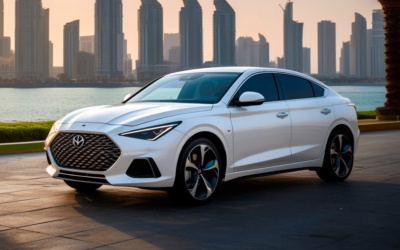
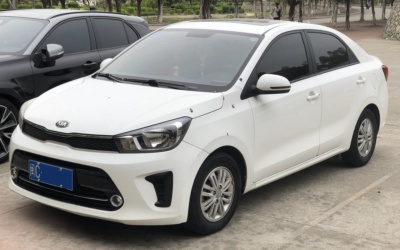
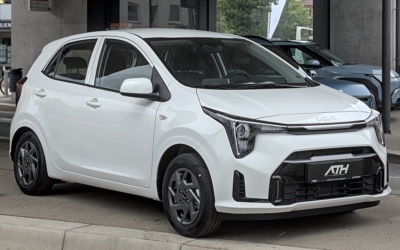
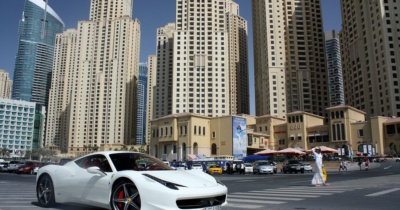
Demand from British clients spreads noticeably wider than average, from a simple sedan for a shopping trip to a supercar or a G-Class for a week's holiday. Minimum age 21 and 1 year of driving experience apply to every car in the fleet without exception, including Lamborghini, Ferrari and Rolls-Royce, there is no separate age requirement for the luxury tier. If you are interested in the premium or performance segment, we have separate guides to supercar and luxury car rental in Dubai with current models and prices.
What to bring
- Passport, and a hotel booking confirmation if needed.
- UK national driving licence.
- An International Driving Permit (IDP), if the trip is long or you want the extra cover.
- A bank card, with your bank notified of the trip beforehand.
Tolls, parking and speed limits
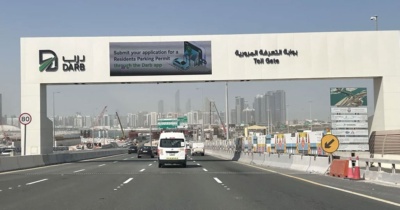
Dubai runs the Salik toll system: AED 6.30 at peak hours (weekdays and Saturday 06:00 to 10:00 and 16:00 to 20:00) and AED 4.20 off peak, VAT included, a flat AED 4.20 all day on Sundays, and free travel from 1 am to 6 am. Abu Dhabi has a similar system called Darb, but most gates only charge on weekdays during peak hours and are free on Sundays and public holidays. The toll tag is already built into the car, there is nothing extra to set up.
Sheikh Zayed Road is generally posted at 100 or 120 km/h depending on the section, and Dubai's speed cameras typically start recording from about 21 km/h over the limit, while Abu Dhabi has no speed tolerance margin at all. Parking in Dubai is paid almost everywhere from early morning to late evening, there have been no paper tickets since 2021, payment is linked to the number plate through an app or meter, and fines arrive electronically rather than as a paper slip under the wiper.
Winter sun and open-top driving
A noticeable share of British clients book a car specifically for the winter months, escaping the cold at home: from November to March Dubai is comfortably warm and sunny almost every day. That is also our busiest season for convertibles, such as the Rolls-Royce Dawn or the Lamborghini Huracan Evo Spyder, when you can drive with the roof down during the day without overheating, unlike in summer. If a convertible is the plan, book ahead, popular models get a queue in winter.