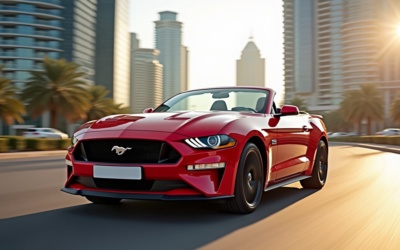
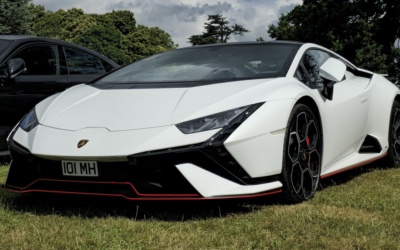
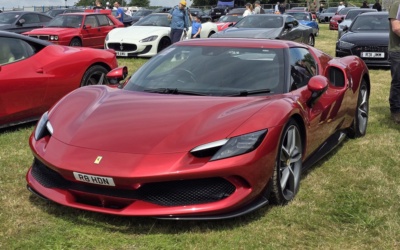
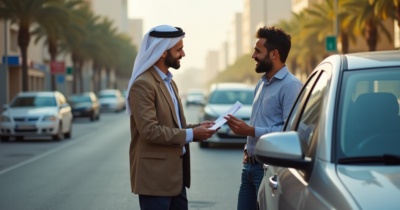
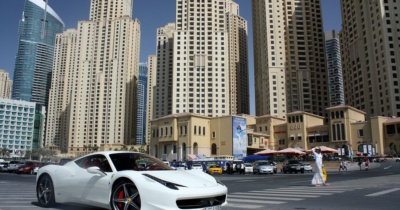
Dubai has the world's largest concentration of supercars for hire: several hundred Lamborghinis, Ferraris, McLarens and Porsches waiting for clients every day. Prices are one and a half to two times below European levels, the roads are wide and immaculate, the police are used to such cars, and hotel valets park them by the entrance as a display. But these are still cars worth a million dirhams and more, and they come with their own rules.
Driver requirements
- Minimum age 21.
- At least one year of driving experience, confirmed by the licence issue date.
- An International Driving Permit for citizens of countries outside the UAE's recognised list, including most of Asia, Africa and the CIS.
- Passport and proof of your hotel or UAE address.
- Full prepayment of the rental.
Only the driver named in the contract may drive. Handing the car to a friend, even for five minutes for a photo behind the wheel with the engine running, is a breach that voids the insurance. A second driver can be added at handover if they meet the same requirements.
Deposit and insurance
The market standard deposit for a supercar is AED 5,000 to 20,000, blocked on a credit card for up to a month after return while fines come through. We take no deposit even on supercars, but we ask for the rental to be paid in full in advance; that is how our model works.
Basic insurance is included. The excess in an at-fault accident ranges from AED 5,000 on a Mustang or Corvette to AED 20,000 to 30,000 on a Ferrari or Lamborghini, depending on the car. For AED 200 to 500 a day the excess can be reduced to zero. A scratch on a Ferrari's carbon bumper or a single wheel replacement on a Urus costs more than a month of sedan rental, so full cover on a supercar is not an optional extra but a sensible norm, and we recommend it firmly.
Mileage and restrictions
The limit is 250 km a day, with extra kilometres charged at the rate shown on the car page. That covers Dubai, an evening along Jumeirah Beach Road and the Palm, but not a return trip to Abu Dhabi, which is 260 km on the highway alone. If you plan a long drive, arrange unlimited mileage in advance; it costs less than the excess charges.
Prohibited: leaving the UAE, entering a race circuit including Dubai Autodrome and Yas Marina, driving into the desert or onto gravel, racing, drifting and street racing, smoking in the cabin and carrying animals. All of this is written into the contract, and each carries a company penalty on top of any government fine.
Speed and the police
Dubai's 20 km/h tolerance does not change the fact that a camera fires at 141 on the 120 km/h sections of Sheikh Zayed Road and at 121 on the 100 km/h sections, and that at 200 km/h on a 120 km/h stretch the car is impounded for 30 days with a AED 2,000 fine and 12 black points, or on a 100 km/h stretch for 60 days with AED 3,000 and 23 points. For a renter that means the fine, the daily rate for every idle day and a pound release fee of AED 100 a day. A supercar at AED 3,000 a day becomes a AED 90,000 to 180,000 invoice. Abu Dhabi has no tolerance at all.
Dubai police are relaxed about supercars, but a loud exhaust in residential areas at night and hard acceleration at traffic lights attract patrol attention. Dubai is about how the car looks and sounds at cruising speed, not about top speed.
What is in the fleet and what it costs
| Car | Engine | 0–100 km/h | Per day, AED | Per week, AED |
|---|---|---|---|---|
| Ford Mustang GT Convertible | 5.0 L V8, 486 hp | 4.5 s | 450 | 2,700 |
| Chevrolet Corvette C8 Convertible | 6.2 L V8, 495 hp | 3.0 s | 750 | 4,350 |
| BMW M4 Competition Convertible | 3.0 L, 530 hp | 3.7 s | 900 | 5,220 |
| Porsche 911 Carrera | 3.0 L, 385 hp | 4.2 s | 1,600 | 10,850 |
| Aston Martin Vantage | 4.0 L V8, 503 hp | 3.6 s | 2,000 | 11,000 |
| Porsche 911 Turbo S | 3.8 L, 650 hp | 2.7 s | 2,200 | 12,675 |
| Ferrari Roma | 3.9 L V8, 620 hp | 3.4 s | 2,500 | 13,750 |
| McLaren 720S Spider | 4.0 L V8, 720 hp | 2.9 s | 2,800 | 15,400 |
| Lamborghini Huracan Tecnica | 5.2 L V10, 640 hp | 3.2 s | 2,800 | 15,400 |
| Ferrari F8 Spider | 3.9 L V8, 720 hp | 2.9 s | 2,900 | 15,950 |
| Ferrari 296 GTB | 3.0 L V6 hybrid, 830 hp | 2.9 s | 3,000 | 16,500 |
| Lamborghini Huracan EVO Spyder | 5.2 L V10, 640 hp | 3.1 s | 3,000 | 16,500 |
| Porsche 911 GT3 RS | 4.0 L, 525 hp | 3.2 s | 4,500 | 34,300 |
| Ferrari Purosangue | 6.5 L V12, 725 hp | 3.3 s | 6,000 | 33,000 |
Where to drive it
Jumeirah Beach Road in the evening past the Burj Al Arab and the beaches, the classic photo route. The Marina promenade and The Walk at JBR, where the largest number of people see the car. Palm Jumeirah and the bridge to Atlantis, especially at night under the lights. The Al Qudra road through the desert at sunset, empty, straight and largely camera-free. Downtown around the Burj Khalifa, where valets park cars at the Dubai Mall entrance. On Saturday mornings Sheikh Zayed Road is nearly clear and you can cross the whole city in twenty minutes.
How long to rent for
One day if it is a gift, a photo shoot or a bucket-list item. Two or three days if you want to feel the car rather than just photograph it: one day is barely enough to get used to its width. For a week, a Porsche, Mustang or Corvette makes sense as they suit daily driving. Ferraris and Lamborghinis become tiring day to day: low seating, firm suspension, a boot for one bag and the impossibility of crossing a speed bump without the nose lift.
What to check at handover
- Photograph the car from every angle, including wheels, sills and the underside of the front bumper.
- Test the front-axle lift if fitted; you will need it at every car park entrance.
- Confirm which fuel to use: almost all supercars require Super 98.
- Make sure the contract states the excess level you agreed.
- Ask about suspension and exhaust modes: on many cars the loud mode is a button.
Practical details
Mid-engined supercars have their boot at the front and it fits one small bag, so plan accordingly. Ground clearance is low: take car park entrances and ramps at an angle and slowly. In summer a black Alcantara interior heats to dangerous temperatures, so park in shade. Super 98 fuel costs more than regular, a full tank in a Lamborghini runs AED 300 to 350 and lasts 250 to 300 km when driven enthusiastically.
What a day with a supercar is actually like
Clients often imagine supercar rental differently from how it works in practice. The real sequence looks like this.
The car arrives at your hotel in the morning. The first twenty minutes go on inspection, photographs and explanations: how the bonnet opens, where the front-axle lift is, which exhaust mode is louder, and which fuel to use. Then half an hour of driving on quiet streets to get used to the width and the low seating: in a Lamborghini Huracan you sit 60 centimetres above the asphalt and cannot see the bonnet.
Then the route: Jumeirah Beach Road, Palm Jumeirah, the Marina, Downtown. Average speed 60 to 80 km/h, because the point is not speed but how the car looks and sounds. Every stop brings attention from passers-by and requests for photographs. At mall car parks the valet puts the car by the entrance.
Over a day you will cover 100 to 150 kilometres and spend AED 200 to 300 on Super 98. The memory comes not from top speed but from the sound in an underground car park and from how people react.
Supercar photo shoots: where and how
Half of supercar rentals in Dubai involve photography. The best locations and times:
- Palm Jumeirah with the Atlantis backdrop, early morning before 8:00 while it is empty.
- Downtown streets by the Burj Khalifa, at night after 23:00 with the lights on.
- The Al Qudra desert road, at sunset with dunes on both sides and an empty straight road.
- The Marina promenade and bridge, during the blue hour after sunset.
- The quiet stretches of Al Qudra Desert Road with empty tarmac and sand ridges.
- Rooftop car parks in Downtown with tower views, though these need permission from the building management.
We can arrange a photographer with their own equipment and knowledge of these locations, plus a second car for tracking shots in motion. Discuss it when booking.
What not to do in a supercar in Dubai
- Accelerating hard at traffic lights. Police monitor these spots and cameras log sharp acceleration as dangerous driving, at AED 2,000.
- Using loud exhaust mode in residential areas at night. The noise fine is AED 2,000 and 12 black points.
- Driving into the desert or onto gravel. Ten centimetres of ground clearance and a low front bumper mean underbody damage that insurance does not cover.
- Leaving it parked on the street unattended for long. Risk of scratches and unwanted attention.
- Letting friends drive. Insurance does not apply to an unnamed driver, and all damage becomes yours.
- Taking it on a track. Explicitly prohibited in the contract; the circuits run their own programmes for that.